
Guide
How to Choose a Sound Bed: VIBE Go vs Pro vs HyperVIBE
A buyer's guide to sound beds: what to check on any system, and how VIBE Go, VIBE Pro and HyperVIBE compare on price, transducers, weight and use.
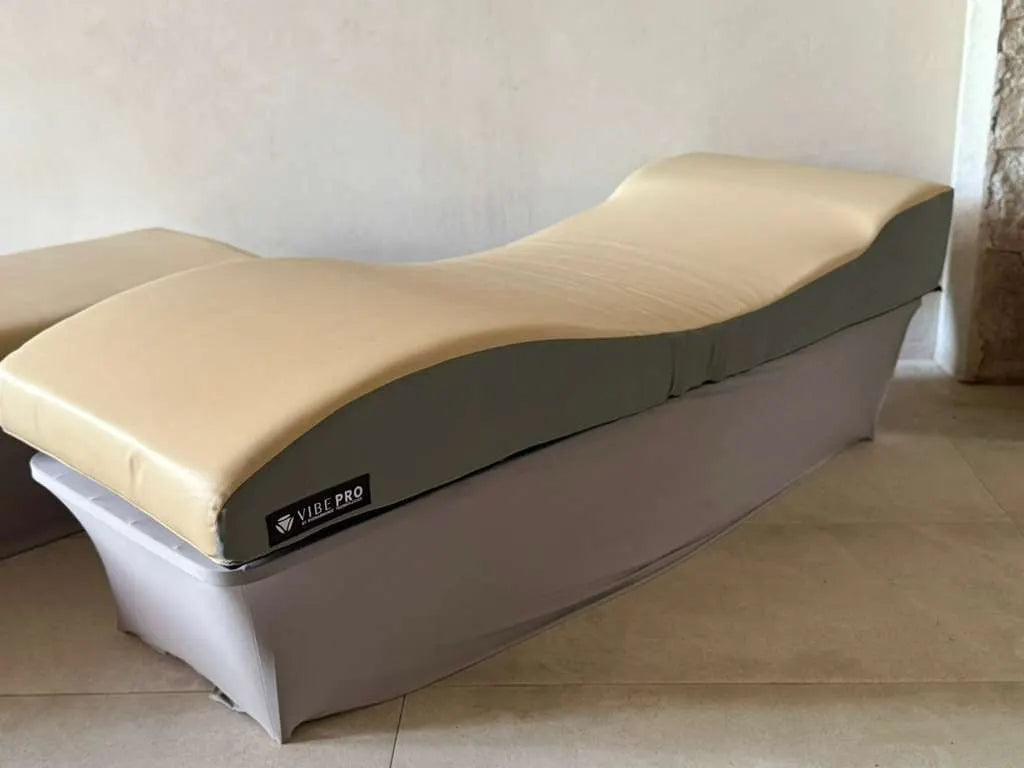
The short answer: choose a sound bed by how many transducers it has, how good the headphones and music are, where it will live, and what the trial and payment terms look like. Our three systems cover the main needs. VIBE Go ($5,500) is portable with two transducers, VIBE Pro ($6,500) is full size with four, and HyperVIBE ($24,999) is the numbered Founder's Series with eight vibration cores.
This guide walks through what to check on any sound bed, then compares the three VIBE systems side by side so you can pick the one that fits your home or practice.
What is a sound bed?
A sound bed, sometimes called a vibroacoustic bed, a frequency bed or a sound lounger, is a surface you lie on while music plays. You hear the music through headphones and feel its low tones as gentle vibration through your back, legs and arms. On a VIBE, that vibration sits at about 30 to 120 Hz and is timed to the music, so sound and vibration arrive together.
Think of it as a full-body version of a meditation mat with sound. People describe sessions as relaxing and use them to unwind at the end of the day. A preset session on VIBE runs 20 minutes. For the longer explanation, read our guide to what vibroacoustic sound is.
What should you look for in a sound bed?
Transducers: how many, and how clean
Transducers turn the audio signal into physical vibration. They are the core of any sound bed, so look at two things: how many there are, and how well they follow the music. More transducers spread the vibration across more of the body. High-definition transducers deliver it cleanly and evenly, so the vibration follows the music instead of buzzing.
VIBE Go has two transducers, upper and lower. VIBE Pro has four, head to toe. HyperVIBE has eight of our own vibration cores on a carbon fiber inner chassis.
Headphones and the music library
The vibration is only half of a session. The other half is what you hear. Ask which headphones come with the bed, whether there is a headphone amp, and what music is included.
VIBE uses V-Moda headphones. The music is Sonic-Ceuticals, audio programs composed by our founder, Dr. Steven Schwartz, in five to seven layers and made to be heard and felt at once. VIBE Go and VIBE Pro include 42+ tracks and 19 preset programs on the controller. The Vibrophile app, included with every system, adds programs for streaming and lets you build and save your own. You can also play your own audio through the aux input: a playlist, an audiobook or silence.
Portability and weight
Decide early whether the bed will stay in one room or move. A vibration bed for home that never moves can be larger and more substantial. One that travels to clients, retreats or a second home needs to be light and pack down.
VIBE Go weighs 51 lbs and packs into its own travel case. VIBE Pro weighs 100 lbs on a metal frame and is built to stay in one room.
Room and setup
Picture the space you have in mind and think about who will set the bed up. You need room to lie flat, a power outlet nearby and a quiet spot. VIBE Go sets up in minutes. VIBE Pro comes with white glove delivery and setup. HyperVIBE delivery is arranged on your consultation.
Power: 110v and 220v
If you live outside North America, or plan to travel with your system, check the voltage. The VIBE amplifier supports both 110v and 220v, and we ship worldwide. Shipping costs are added at checkout.
Sharing and cleaning
Many sound beds end up shared by a household or used with clients. Look for a system where each person can choose their own program and where the surface is easy to keep clean. VIBE is built for families, couples and practices, and the washable cover keeps things clean between people.
Warranty, trial and returns
Read the warranty and the return terms before you buy, not after. Every VIBE system is covered by the VIBE limited warranty against manufacturing defects, and eligible products come with a 30-day trial. We cover the trial terms below.
Financing
A good sound bed is a real purchase. Check which payment options exist and whether HSA or FSA funds can be used. Our options are further down this page.
Trying one first
Specs only go so far. If you can, lie on one before you decide. A single 20-minute session tells you more about the feel than any product page.
VIBE Go vs VIBE Pro vs HyperVIBE: how do they compare?
| System | Price | Transducers | Weight | Build | Best for |
|---|---|---|---|---|---|
| VIBE Go | $5,500 | Two transducers | 51 lbs | Lightweight frame, premium foam, travel case | Home, travel and mobile practitioners |
| VIBE Pro | $6,500 | Four transducers | 100 lbs | Metal frame, thicker contoured foam | Clinics, spas, wellness centers and daily home use |
| HyperVIBE | $24,999 | Eight vibration cores | In the full spec sheet | Carbon fiber inner chassis, stitch-quilted top | A flagship room, home or practice |
For the full side by side, including control, sound and delivery, see our VIBE comparison page.
Which VIBE is right for you?
VIBE Go: the portable sound bed
VIBE Go gives you the full session in a VIBE you can carry. At 51 lbs it sets up in a spare room, packs into its own case and travels with you. It has two transducers, Hi-Fi stereo through the headphones and tablet control.
It fits people who want a sound bed at home without giving up a whole room, and practitioners who bring sessions to clients at a studio, a retreat or a home visit.
VIBE Pro: full size for daily use
VIBE Pro is full size, with four transducers instead of two. It has thicker contoured foam on a metal frame and premium surround sound with its own headphone amp. We deliver it and set it up for you.
It is our most popular home system and the one clinics, spas and wellness centers choose. Pick it if you have a dedicated room and plan to use it most days.
HyperVIBE: the Founder's Series
HyperVIBE is the numbered Founder's Series and the most advanced VIBE we have built. It was two years in development. Eight vibration cores sit on a custom carbon fiber inner chassis under a stitch-quilted top, and the HyperCORE control center pairs a touchscreen with high-power amplification. It suits a flagship room in a home or a high-end practice. Its full spec sheet is on its store page.
Other options
If you run a sports, recovery or biohacking facility, we also make Recovery VIBE for those spaces. And if you want a system made to order, down to the materials, base, interface and branding, custom VIBE Go starts at $10,000 and custom VIBE Pro at $12,000.
How can you try a VIBE before you buy?
Owners and practices around the country offer sessions. Use Find your VIBE to look for one near you. If there is none close by, or you would like help choosing, book a free 30-minute consultation with our team. Every system also includes online training videos and virtual sessions.
When you try one, give it the full 20 minutes. Notice how the vibration follows the music and whether the headphones feel comfortable. Lie still for a minute at the end before you get up.
Can you pay for a sound bed over time?
Yes. You can pay over time with Shop Pay Installments, Klarna or Acima, and HSA and FSA are accepted. Rates, terms and approval are set by each provider. The details are on our financing options page.
What are the 30-day trial terms?
Eligible products come with a 30-day trial. If VIBE is not right for you, return it within 30 days for a refund. Return shipping is not covered, so keep that in mind, especially for a full-size system.
A quick checklist before you buy
- Count the transducers and ask how cleanly they follow the music.
- Check the headphones, the music library and whether you can play your own audio.
- Decide whether the bed stays in one room or travels, and check the weight.
- Confirm the voltage if you live or travel outside North America.
- Think about who else will use it and how you will keep it clean.
- Read the warranty, the trial terms and who pays return shipping.
- Look at payment options and whether HSA or FSA funds apply.
- Try a session first if you can.
Sound bed FAQ
How much does a vibroacoustic bed cost?
VIBE Go is $5,500, VIBE Pro is $6,500 and HyperVIBE is $24,999. Custom VIBE Go starts at $10,000 and custom VIBE Pro at $12,000.
How long is a session, and how often?
The preset programs run 20 minutes. Most owners use VIBE once a day, and three to five sessions a week is a good place to start.
Do I need the app?
No. The controller comes set up with preset programs, ready to start a session. The Vibrophile app is there for streaming and for building your own programs.
Can more than one person use the same system?
Yes. Each person can choose their own program, and the washable cover keeps things clean between people.
Who should check with a doctor first?
You control the volume and intensity at all times. If you are pregnant, have a pacemaker or another implanted device, or have a seizure disorder, talk to your doctor before you use VIBE.
Do you ship outside the US?
Yes, we ship worldwide. Shipping costs are added at checkout, and the amplifier supports both 110v and 220v.
VIBE is a wellness product. These statements have not been evaluated by the Food and Drug Administration. VIBE products are not intended to diagnose, treat, cure, or prevent any disease.
Want to feel it for yourself?
Try a VIBE near you, or talk it through with our team in a free 30-minute consultation.
Quick answers: VIBE facts and the FAQ