
Guide
What Is Vibroacoustic Sound? A Plain Guide to Sound Beds
Vibroacoustic sound is music you hear and feel at the same time. Here is how a sound bed works, what a VIBE session is like, and what the different names mean.
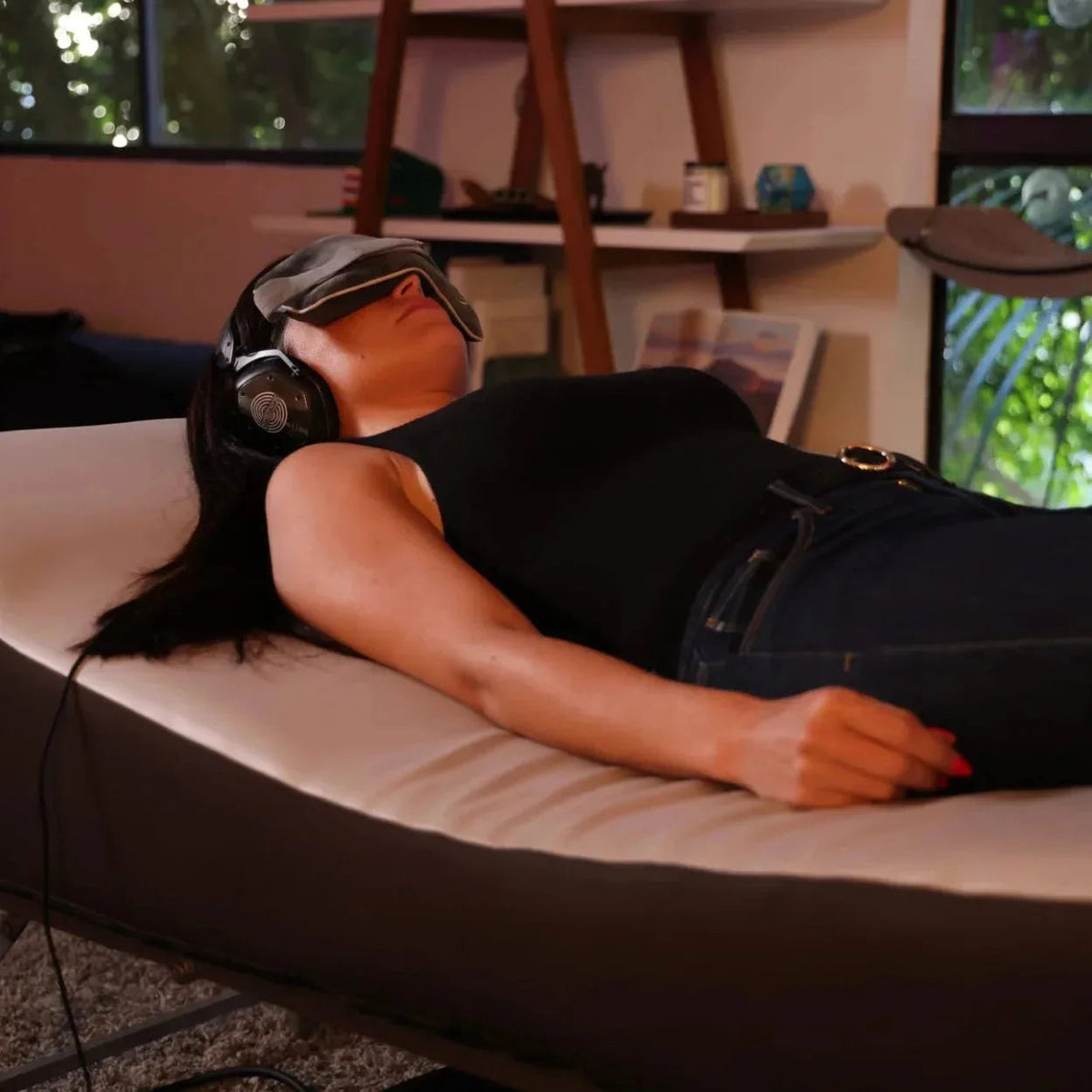
Vibroacoustic sound is music you hear and feel at the same time. Low tones travel through a bed or mat and into your body while the full piece of music plays in your headphones. A vibroacoustic bed, often called a sound bed, is the surface you lie on to take it in.
This guide explains how it works in plain words, what a session on a VIBE is like, and what the different names people search for actually mean.
What is vibroacoustic sound?
Think of the low notes you feel in your chest at a concert. You do not only hear the bass. You feel it. Vibroacoustic sound takes that everyday experience and makes it gentle, even and deliberate.
On a VIBE, the low tones you feel are matched to the music you hear, so sound and vibration arrive together. Because the vibration covers the whole body, a session feels less like listening to music and more like being inside it.
We describe it as a way of relaxing with sound and vibration together. That is the whole idea. There is no trick to it and nothing to learn before you start.
How does a VIBE work?
A VIBE has three working parts: the surface you lie on, the music, and the headphones.
- Transducers inside the VIBE. A transducer turns an audio signal into physical vibration. VIBE Go has two, VIBE Pro has four, and HyperVIBE has eight vibration cores. They sit under the surface and carry vibration of about 30 to 120 Hz, timed to the music.
- Headphones for your ears. Music plays through the headphones and through the VIBE at the same moment, so you hear it with your ears and feel it through your whole body at once.
- The music itself. Our programs are built on Sonic-Ceuticals, audio composed by our founder, Dr. Steven Schwartz. Each one layers five to seven bands of frequency, mathematical ratios and natural tones, and is made to be heard and felt at once.
Why do the transducers matter so much? High-definition transducers deliver vibration cleanly and evenly, so it follows the music instead of buzzing. That is the difference between a smooth, musical feel and a rattle.
You can read more about the parts and how they fit together on our how VIBE works page.
What does "30 to 120 Hz" mean?
Hz, or hertz, counts how many times something moves back and forth each second. The range of about 30 to 120 Hz sits in the low end of what we hear: the deep bass notes of music. These are the tones you tend to feel as much as hear, which is why they suit a sound bed.
How does the body pick up low vibration?
Your skin is full of touch receptors. Some respond to light pressure, some to stretch, and some to vibration. When a low tone passes through the surface you are lying on, your body senses it as a gentle, steady movement.
On a VIBE, you feel it through your back, legs and arms. Because the transducers spread vibration along the length of the body, the feeling is broad and even rather than focused on one spot.
This is ordinary sensing, the same way you notice a phone buzzing in your pocket or the hum of a car engine through the seat. A vibroacoustic bed simply pairs that sense of touch with music, so both arrive together.
What is a VIBE session like?
A session is simple, and it runs itself.
- Lie back. Lie down on the VIBE and put the headphones on. Most people close their eyes.
- Choose a program. Pick one of the 19 preset programs on the controller, or one of your own in the Vibrophile app.
- Let it play. The music plays through the headphones and through the VIBE. The session ends on its own.
- Take a moment. Lie still for a minute before you get up. There is nothing else to do.
The preset programs run 20 minutes. You control the volume and intensity at all times, so you can keep it soft or turn it up to suit you.
Most people describe deep relaxation and a quieter mind during the session. Many drift off, and falling asleep during a session is common and fine. Everyone is different, and regular use matters more than any one session.
Most owners use VIBE once a day. Three to five sessions a week is a good place to start. Our guide to your first VIBE sessions walks through the first few weeks.
Sound bed, vibroacoustic bed, vibration bed: what is the difference?
People search for this kind of product using many names. Some overlap, and some describe quite different things. Here is a general guide to the terms.
Vibroacoustic bed
A bed or table with transducers built in that turn music into vibration, usually paired with headphones so you hear and feel the same sound together. A VIBE is a vibroacoustic bed. Some people call the wider practice vibroacoustic therapy, but at its core the idea is sound and vibration delivered together.
Sound bed
A broad, everyday name. It is often used for vibroacoustic beds, and sometimes for beds or tables that only play sound through speakers without built-in vibration. If a product is called a sound bed, it is worth asking whether you feel the music through the surface or only hear it.
Vibration bed or massage bed
These names usually describe a surface that vibrates on its own, often with a motor, without being linked to music. The movement tends to be a steady pattern rather than a feel that follows a piece of music. A vibroacoustic bed is different because the vibration comes from the music itself.
Frequency bed
A loose term with no single meaning. People use it for beds that play set tones, for vibroacoustic beds, and for other products altogether. When you see it, look for the specifics: whether there are transducers, what range they cover, and what audio drives them.
Questions to ask about any of them
- Do you feel the vibration, or only hear sound?
- Is the vibration timed to the music you hear?
- How many transducers are there, and where do they sit?
- What music comes with it, and can you play your own?
- Can you try one before you buy?
Our guide to choosing a sound bed goes deeper on each of these.
Can you use your own music?
Yes. You can play anything through the aux input: a playlist, an audiobook, or nothing at all. The Vibrophile app, included with every system, adds the Sonic-Ceuticals programs, lets you stream them, and lets you build and save your own programs. You do not need the app to start, since the controller comes set up with preset programs.
Who uses a vibroacoustic bed?
VIBE owners live in more than 30 countries, and they fall into two broad groups.
Homes. Families and couples keep a VIBE in a spare room or a dedicated space and share it. Each person can choose their own program, and the washable cover keeps things clean between people. Owners describe a routine that is easy to keep, and many use a session to unwind at the end of the day.
Practices. Clinics, spas, wellness centers and mobile practitioners offer VIBE sessions to their clients. VIBE Go weighs 51 lbs and packs into its own case, so it travels to a studio or a home visit. VIBE Pro is full size on a metal frame and stays in one room. See VIBE for practices for how each one fits a business.
We make three systems: VIBE Go (USD 5,500), VIBE Pro (USD 6,500) and HyperVIBE, the numbered Founder's Series (USD 24,999). You can compare all three side by side.
Who should check with a doctor first?
VIBE is non-invasive. It uses gentle vibration and sound, and you control the volume and intensity at all times.
If you are pregnant, have a pacemaker or another implanted device, or have a seizure disorder, talk to your doctor before you use VIBE. If you have a health question, our team will point you to your own clinician.
Frequently asked questions
How long is a session, and how often?
The preset programs run twenty minutes. Most owners use VIBE once a day; three to five sessions a week is a good place to start.
What will I feel?
Most people describe deep relaxation and a quieter mind during the session. Everyone is different, and regular use matters more than any one session.
Do I need the app?
No. The controller comes set up with preset programs, ready to start a session. The app is there for streaming and for building your own programs.
Can more than one person use the same system?
Yes. VIBE is built for families, couples and practices. Each person can choose their own program, and the washable cover keeps things clean between people.
Can I try a VIBE first?
Yes. Owners and practices around the country offer sessions. Find a VIBE near you.
What if VIBE is not right for me?
Eligible products come with a 30-day trial. Return within 30 days for a refund; return shipping is not covered. More answers are on our FAQ page.
VIBE is a wellness product. These statements have not been evaluated by the Food and Drug Administration. VIBE products are not intended to diagnose, treat, cure, or prevent any disease.
Want to feel it for yourself?
Try a VIBE near you, or talk it through with our team in a free 30-minute consultation.
Quick answers: VIBE facts and the FAQ